Did you know that approximately 4.7 million dog bites occur annually in the United States?
Not surprisingly, children make up the majority of dog bite victims, with 70% of these dog bites involving a child’s head, neck or face. When dogs bite people, other animals, or are generally aggressive towards either, it presents a real danger to both the animal and all those s/he comes in contact with. This includes not only the danger of physical harm, but also the risk of lawsuits filed against the owner and even the threat of having to put your dog down.
This is not to mention the other serious and devastating consequences of having an aggressive animal. For example, you feel scared to be around your own dog, you can’t take your dog anywhere because you fear they will hurt someone, you can’t control your dog and by extension your home environment, and so much more.
If you have a dog that shows aggressive tendencies, acts violently toward other animals or people, or has already bitten someone, researching dog training is the first step in the right direction. “Dog aggression” is a specialty of Absolute K-9, and our comprehensive training programs have very high success rates.
FACT: Many training centers will not take on aggressive animal cases. Absolute K-9 is different. We are trained and experienced in handling aggressive animals and are able to help curb these violent behaviors in dogs. In fact, we are known for our exceptional ability to handle cases of canine aggression. To speak with one of our certified trainers today, please contact us at 858-209-4000
Read on to learn more about some of the causes of dog aggression, the different types of dog aggression, symptoms of aggression and some steps you should and should not take when handling a dangerous dog.
Causes of Aggression
Genes and heredity are thought to have a large influence over the development of canine aggression. For example, dogs that have been bred for aggression, such as Pit Bulls and Rottweilers, may be more prone to develop aggressive behaviors than breeds that have not been born with this trait. (This is not to say, of course, that all members of these breeds will display aggression). Furthermore, over-breeding and inbreeding can lead to unstable temperament in dogs.
In more situational cases, aggression can be the result of hormones in unneutered male dogs, and females that are nursing, in heat, or having a false pregnancy. Environment is another key factor in the development of aggression. Animals who have been kept (either currently or with a past owner) in poor living situations are also more prone to develop aggression.
The following environmental conditions can increase the risk of aggression in dogs:
- Lack of proper socialization with humans and other pets
- Excessive physical punishment
- A previous attack or scare from another aggressive dog
- Excessive or unwarranted praise by owners without providing discipline and boundaries
- Isolation from human contact
- Frequent teasing, taunting or other harassment from children or adults
- Aggravation from strangers or other passersby
When a dog establishes “alpha” or leader status among their human family, this can snowball into more serious aggressive issues down the line. Dogs are social animals that follow pack order within their “family.” This order is established and maintained primarily by body language. When a dog enters a “new pack” (i.e. your family), they will try to determine where they rank among the family. If a dog displays dominant behaviors and is not corrected, they may eventually believe they have established dominance over their owner and other members of their “pack.” Later on, aggression may surface as a dog defends his or her perceived alpha status.
Frequent Question: At what age should my dog be to begin training?
Answer: Any age is fine to start training a dog, however, the optimal age for a puppy is at 8 weeks old.
This is another reason why it is so important to seek dog training early, before aggression develops, so that you can learn how to establish yourself as the pack leader and prevent aggression and other behavioral problems with your dog.
Types of Aggression
Dogs can display several types of aggression including:
- Fear-based or Defensive Aggression – often prompted by fear, pain, threat or punishment. These dogs may display submissive or ambivalent behavior, such as avoidance of eye contact, tucking tail between legs, cowering, submissive urination, exposing their bellies (in the “supine” position), and licking. This type of dog may avoid handling and affection. These are also known as fear-biters, who may become aggressive if cornered, forced into an uncomfortable or new environment, or upon a person or other animal’s retreat.
- Dominant aggression – this type of aggression is characterized by forward, erect and “big” postures, confidence, arousal, forwardness, overbearing nature, unsolicited touch (i.e. paw on shoulder, humping, pushing people aside, etc). This type of dog demands attention, exerts their will, is often possessive, and does not usually obey commands, especially involving submissive behaviors such as sitting or lying down.
- Possessiveness (over food, toys, people, places, etc)
- Territorial aggression (including over the home, while on a leash, and territory marking)
- Sex-specific aggression (that is only to male or female dogs or humans)
- Predatory aggression (attacks or harasses smaller pets)
- Parental aggression (as with nursing mothers or moms with pups)
A dog may display one or more of these types of aggression simultaneously or at different times in their lives. In many cases, a dog displays one of the first two types of aggression alone or in combination with one or more of the latter types of aggression.
Symptoms and Signs of Aggressive Tendencies in Dogs
While the following dog behaviors do not always indicate that a dog is going to be aggressive, these are some signs and symptoms that may alert you to aggressive tendencies in your animal. And remember, it is always better to seek the help of a professional dog trainer before your dog develops more serious behavioral problems. Any of the behaviors below would certainly warrant help from one of our international certified trainers:
- Excessive barking
- Over-protectiveness to toys, treats, bed, food, or other possessions or people
- A tendency to snap, growl or snarl upon approach while eating
- A tendency to snap, snarl, or growl when picked up, groomed, pet, or otherwise handled.
- Marked fear when meeting new people or in unfamiliar environments or situations
- Mounting people’s legs or other dogs (often a sign of dominance in mature dogs)
- Previous attacks on small animals
- Attempts to chase moving objects
- Escapes from home and long periods spent roaming alone and unrestricted
If you are concerned about active or developing aggression in your dog, the best thing you can do is seek the help of a qualified trainer as soon as possible. Please contact Absolute K9 today to speak with a trainer skilled in handling cases of aggression. Your first consultation is free and we guarantee that we can help your dog.
“Such a Good Boy!”
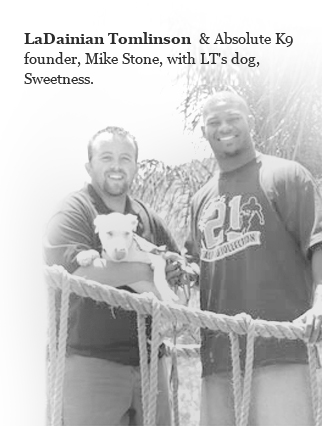
Want to hear what our satisfied clients have to say about us? From LaDainian Tomlinson to the local Thompson family, we’ve made owners, families and their MVPs (Most Valuable Pets) very happy and healthy.
Click here to read our testimonials
Looking to adopt?
On occasion we will receive a call from a client that has sent their dog through training, and for one reason or another they are looking to place the dog.
Please click here for more information